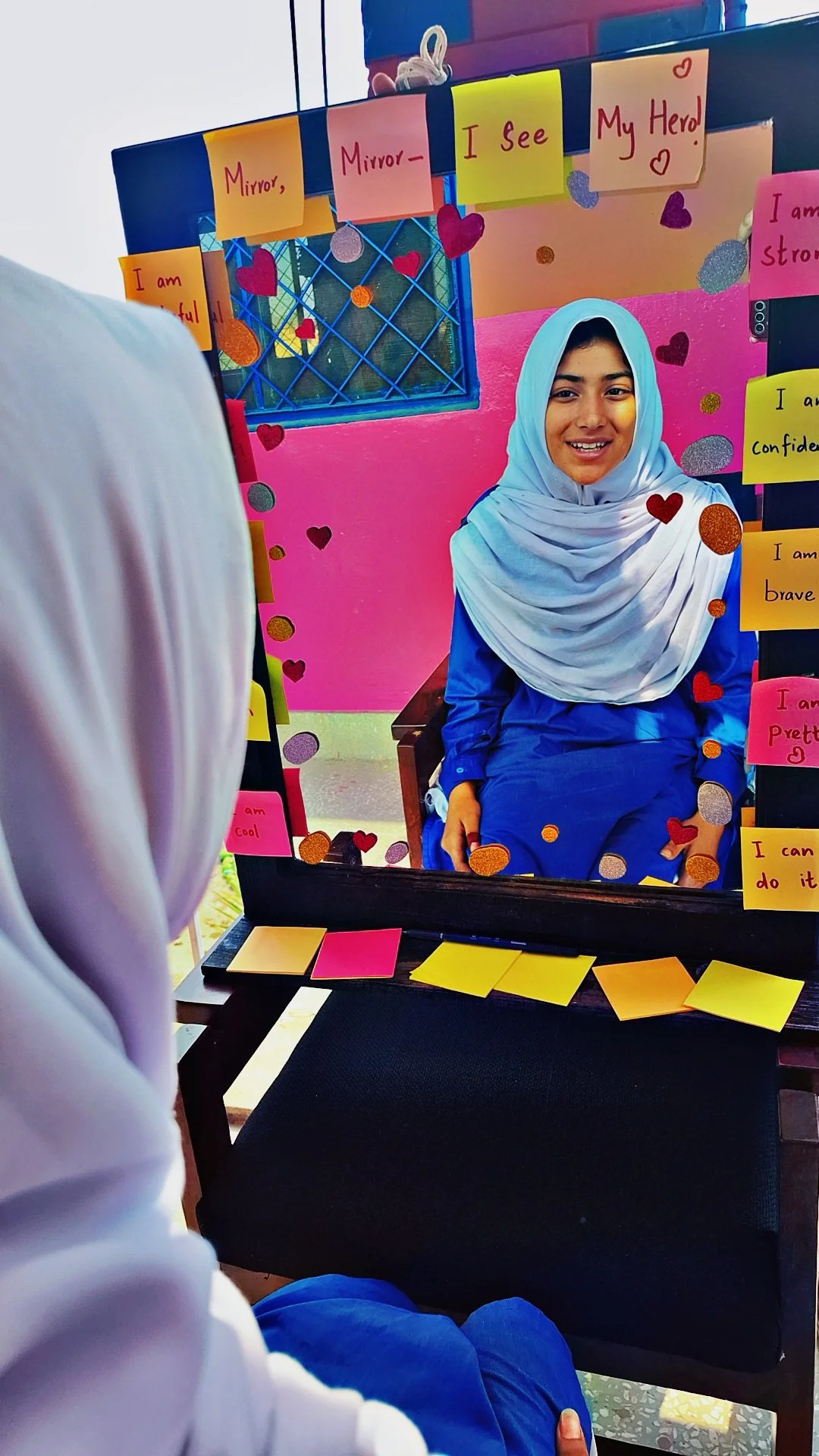
Ibtasam Malik is Head Teacher at Government Girls Elementary School Jalyari Bhi Khan in Rawalpindi, Pakistan. In this guest blog she discusses her journey as an educator and how she’s been building Mental Health programmes for children in and out of traditional school systems. Follow Ibtasam on LinkedIn!
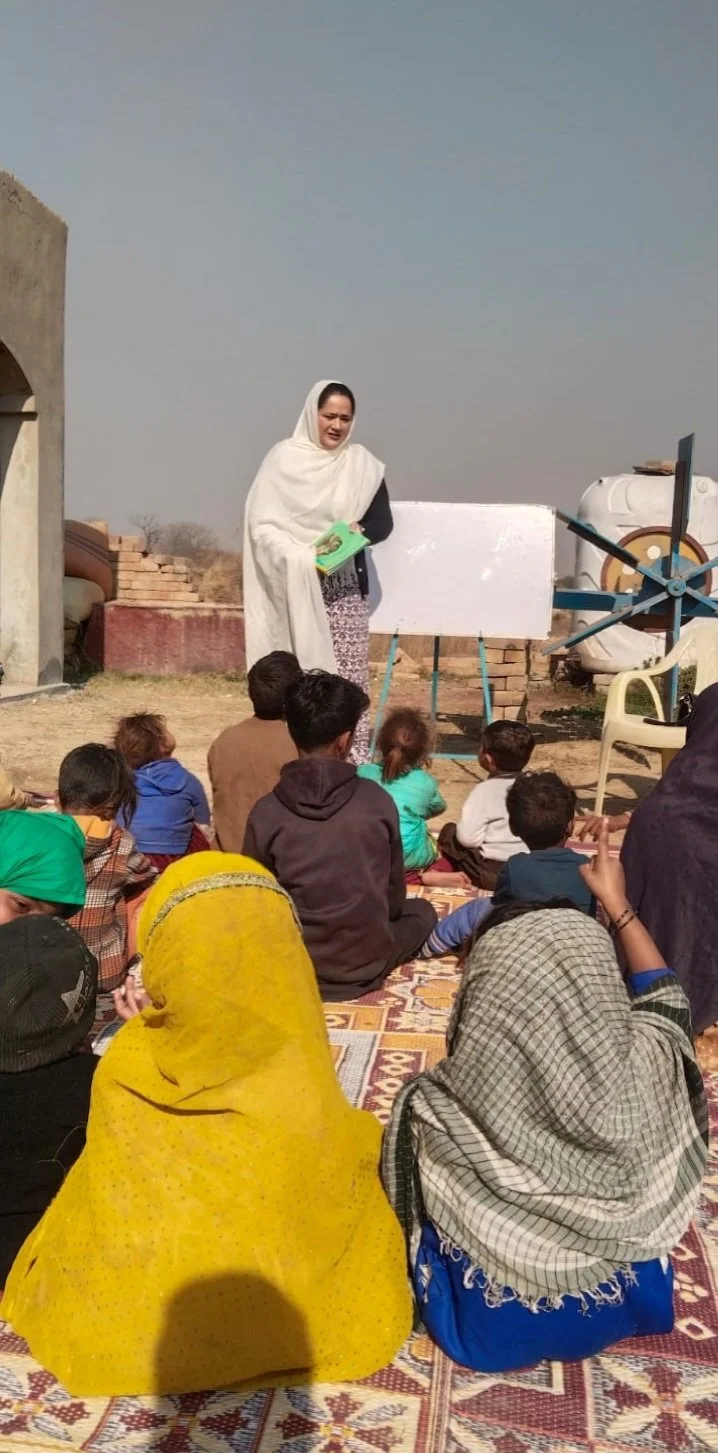
Ibtasam Malik with the children of brick kilns
Education Was My Purpose
I am the daughter of a strong single mother, raised in a rural and conservative community where cultural and financial barriers often limit girls’ dreams. Yet my mother was my greatest cheerleader and support system. She always told me, “Education is the biggest asset a girl can have.” Watching her resilience shaped who I am today and gave me the courage to dream beyond my circumstances.
Growing up, I realized that the right education combined with emotional support can transform anyone’s life. After completing my secondary education, I immediately began teaching orphaned children in my community. At that moment, I understood that I was born to be a teacher. I realized that education was not just my profession, but it was my purpose.
I later joined a rural public school in Gujarkhan serving a marginalized community and dedicated myself to promoting girls’ education. I worked closely with families to shift perspectives around child marriage and child labour. Through continuous awareness sessions, and door-to-door enrollment campaigns, mindsets gradually began to change. Despite severe teacher shortages and limited resources, we transformed the school into one of the highest-enrolled and best-performing schools in the area. Today, it is recognized as one of the best schools in District Rawalpindi.
Our journey has been acknowledged through two consecutive Hero Awards from the Secretary of the School Education Department, UNICEF and GPE, recognition from the Minister of Education Punjab, and international grants from VVOB- education for development. We also launched mental health camps for girls, where students who once hesitated to even say the words “mental health” now speak confidently about their emotions.
I also began my fellowship with ALIF (Academic Leaders Innovation Forum), where I launched Project “Amaan — A Safe Space for Every Child”. Through storytelling and art, underprivileged children learn to identify, express, and manage their emotions. The project integrates psychological well-being with academic growth, ensuring that no child feels unheard.
“My life’s mission aligns with my personal motto: “Inclusive education available for all — leaving no child behind in Pakistan.”
Bringing Rocky Books to My Students
I learned about Rocky Books through LinkedIn, where I connected with Nida Sheriff. She saw my post about the Mental Health Club and reached out to learn more. Through our collaboration, we launched my project “Amaan – A Safe Space for Every Child”, using storytelling to teach emotional wellbeing.
Rocky Books are truly magical. I began integrating them into my mental health camps and sessions in public schools and brick kiln communities, and the impact was immediate. The children connected with the characters so naturally, as if they were finally meeting someone who truly understood them. The stories are simple, beautifully illustrated, and deeply emotional, making them accessible yet profoundly powerful for young readers.
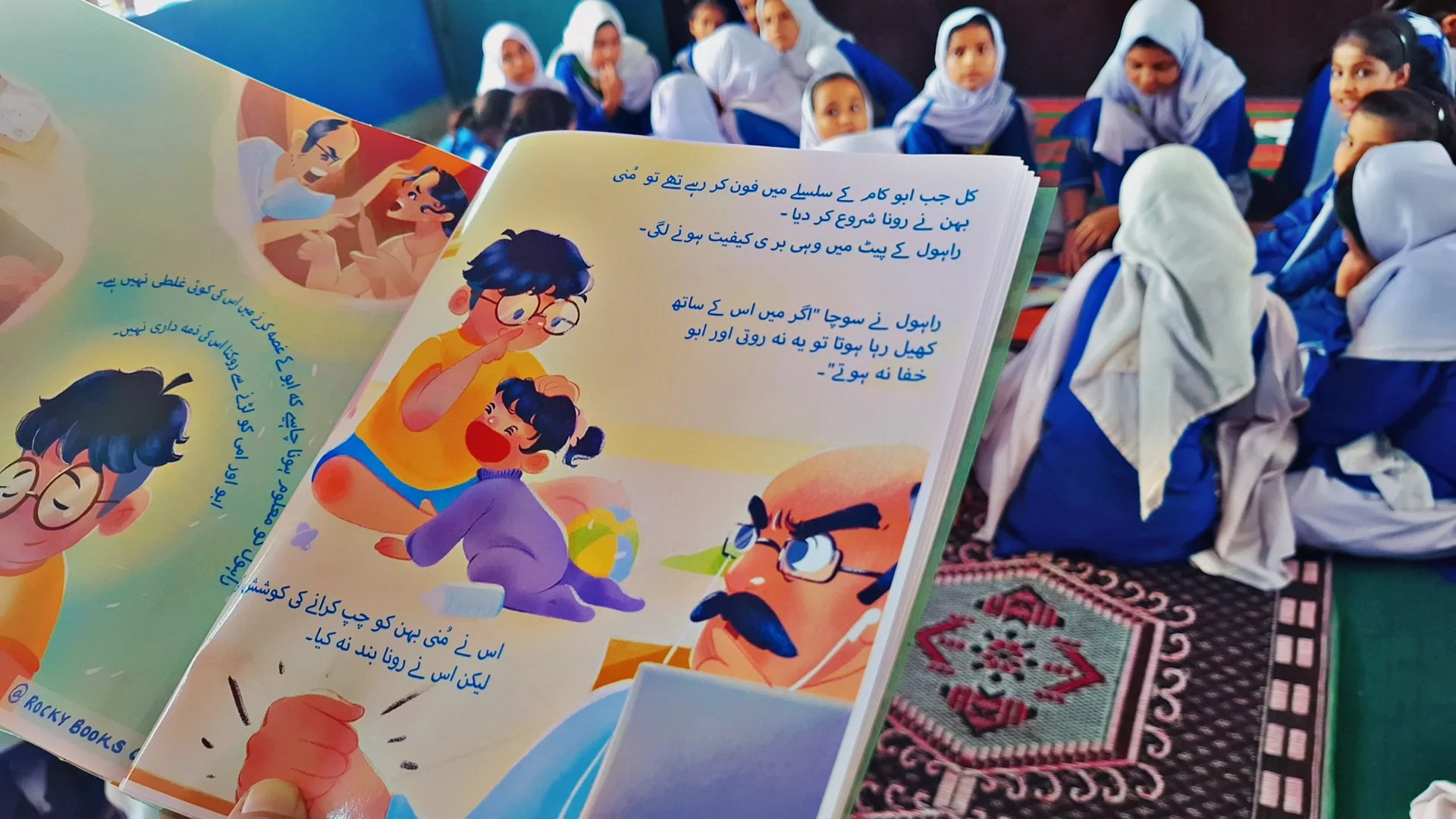
We did not just read the books. We practiced coping skills together, discussed the characters’ emotions, and connected those feelings to real situations in the students’ lives. The structured short term and long term interventions made it easier for me to transform each story into a meaningful and practical learning experience. I also used the assessment scales shared by Rocky Books to conduct pre and post activity reflections, which helped us understand the students’ emotional growth and measure the impact of each session more clearly.
“For children who struggle to articulate their feelings, Rocky Books become mirrors. They help them see themselves with compassion, understand their emotions without shame, and slowly begin to believe in their own strength and worth.”
Designing My School’s Mental Health Club
In public schools like ours, many children face extreme parental neglect and emotional deprivation. Mostly parents are unaware even of the grade their child is studying in. Poverty, domestic conflict, social exclusion, and silence around trauma deeply affect our students, yet these struggles often go unnoticed. Unfortunately, there is no structured mental health policy in many public schools. Teachers are rarely trained in emotional wellbeing, parents carry strong stigma, and children silently battle anxiety, fear, and unresolved trauma. In such a setting, school must become more than an academic institution. It must become an emotionally safe space where children feel seen, heard, and valued.
Recognizing this urgent need, we conducted a ten day Summer Mental Health Camp in our school. I was initially afraid of the community’s reaction because mental health is still considered taboo, and many people associate emotional challenges with supernatural causes. However, the response was overwhelmingly positive. The camp became a milestone in breaking stigma within our community. Girls participated in activities with curiosity and courage. They shared their feelings, practiced coping strategies, and began speaking openly about emotions. It was the first time many of them felt safe enough to express what they had been carrying silently.
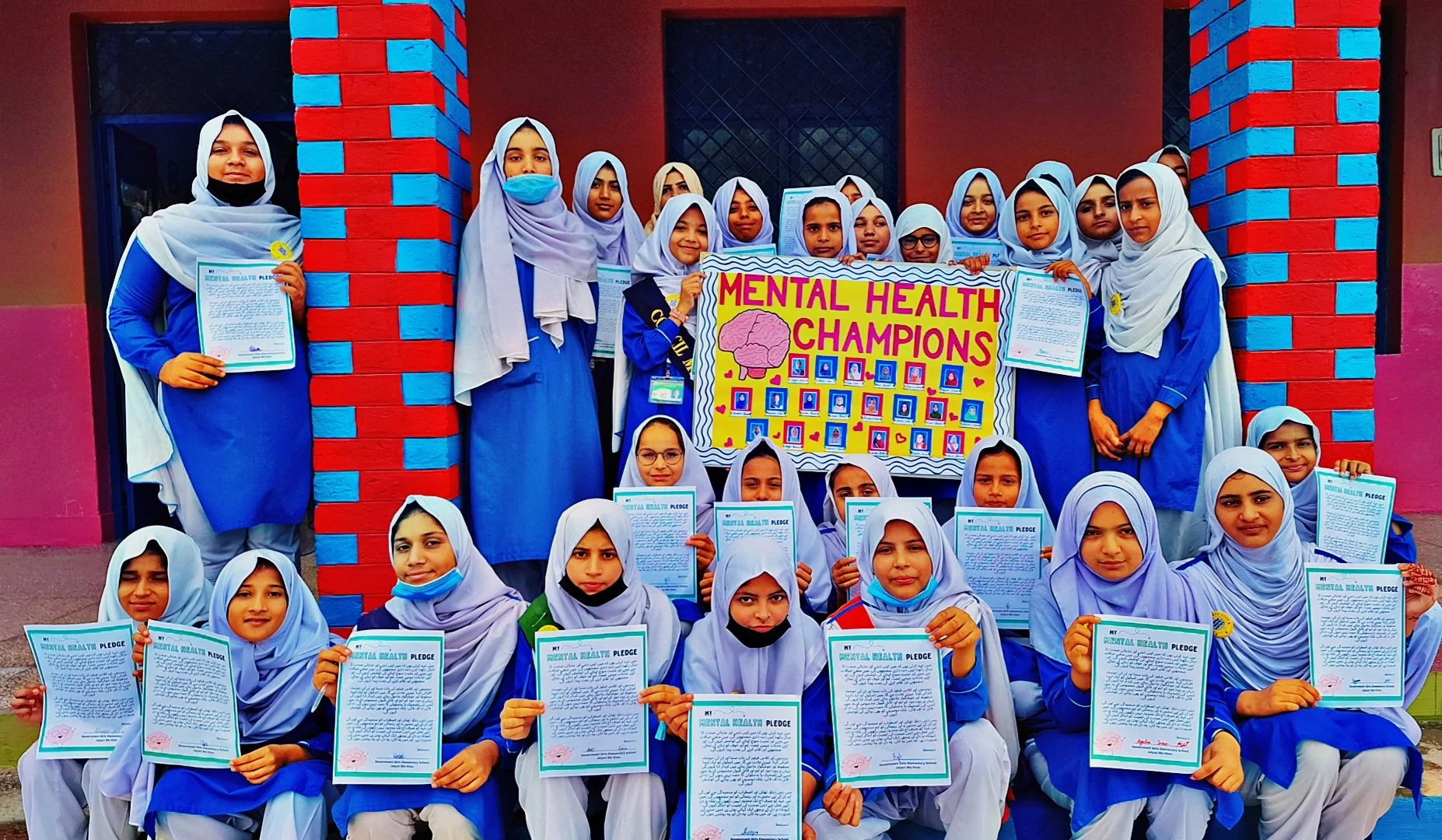
The powerful impact of this camp motivated me to sustain the initiative. As a result, we formally inaugurated a Mental Health Club in our school without any external directives or funding. It was purely a need based, school driven initiative. We selected student Mental Health Champions, initiated regular wellbeing sessions, and introduced peer support programs so students could support one another in a compassionate way.
Today, our school is not only academically strong but emotionally responsive. Students who once struggled in silence now have a platform to speak. Teachers are becoming more aware and sensitive, and parents are gradually shifting their perspectives.
“My favorite part of being a teacher at my school is the pure, unconditional love I receive from my students. Their excitement to learn, their trust, and their genuine smiles make every challenge worthwhile. Seeing them grow, overcome difficulties, and discover their potential fills me with joy and reminds me why I chose this path.”
Bringing Social-Emotional Learning (and Rocky Books) to the Children of Brick Kilns
Through our project “Amaan A Safe Space for Every Child,” focused on the emotional wellbeing of underprivileged children, I collaborated with the NGO Umeed e Sahar to initiate mental wellbeing sessions for children living and working at brick kilns in Pakistan.
These children live in a world very different from ours. Most of them rarely step outside the kiln environment. Their days revolve around labor, responsibility, and survival. Many are born into bonded labor situations and grow up under the shadow of hardship. Yet when we sat with them in a circle, simply talking, and sharing feelings, I witnessed something extraordinary.
Behind their dust covered clothes and tired hands were sparkling eyes filled with curiosity, intelligence, and dreams. They absorbed every session with deep attentiveness. When we spoke about emotions, they listened as if someone was finally giving words to feelings they had carried silently for years. When we encouraged them to express themselves, they did so with a courage that moved me profoundly.
Those children may be surrounded by bricks and smoke, but within them lie foundations strong enough to build a brighter Pakistan, if only we choose to see them.
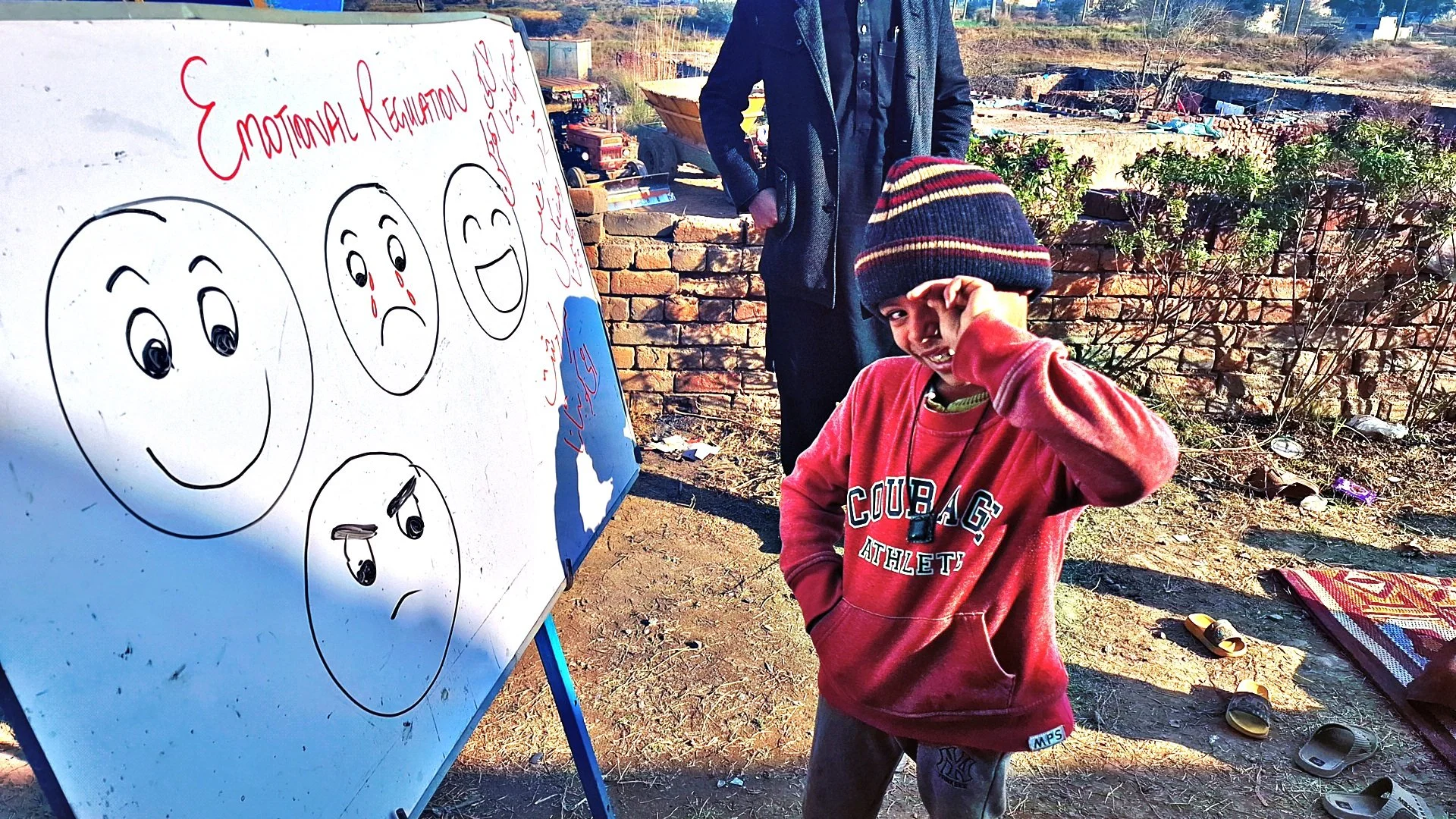
During a wellbeing session at a brick kiln, a young girl read a story about Tanu from Rocky Books. After a brief silence, she looked up and quietly shared, “This story feels like my own life. I understand her emotions. Now I know how to handle conflict at home and how to calm my mother. I have shown her simple ways to reduce stress, and we will continue practicing them together.”
That moment left a deep impression on me. It was far more than a literacy activity. It was a young girl gaining the awareness to care for her mother in ways she had never been able to before. It was healing unfolding naturally and beautifully.
My Hope For The Future…
My hope for the future of education in Pakistan is that it becomes inclusive, compassionate, and responsive to the needs of our children. Mental wellbeing should be a mandatory subject in all schools, teaching children how to understand their emotions, manage stress, and build resilience.
Equally important is preparing teachers to recognize and support students’ emotional needs. In rural and public schools, many teachers are overburdened and lack training in child psychology or trauma-informed practices. Equipping them with these skills can transform classrooms into safe, nurturing spaces.
I also hope for stronger policy implementation and investment in marginalized communities, ensuring quality education is a right, not a privilege. Beyond academics, education should foster life skills and emotional intelligence, shaping children into confident, compassionate, and socially responsible citizens who can contribute meaningfully to Pakistan’s future.